
Wear Liners Supplier in Africa: Materials, Applications and Buying Guide
Industries handling abrasive materials often face recurring problems such as equipment surface wear, unplanned maintenance, material impact and reduced operating life. In mining, cement, quarrying, steel, power generation and bulk-material handling, selecting the right liner can help protect chutes, hoppers, bins, feeders and other high-wear areas. Businesses searching for a reliable Wear Liners Supplier in Africa generally need more than a standard product—they need suitable material selection, correct dimensions, application understanding and dependable supply support.
Bhomanish Ventures Private Limited supports industrial buyers looking for wear protection solutions based on operating conditions and equipment requirements. Instead of selecting a liner only by thickness or price, buyers should consider the material being handled, impact conditions, sliding abrasion, temperature, installation method and expected maintenance requirements.
What Are Wear Liners and How Do They Work?
Wear liners are protective components installed on surfaces exposed to continuous abrasion, impact or material movement. Their primary purpose is to act as a replaceable wear surface between the processed material and the structural equipment.
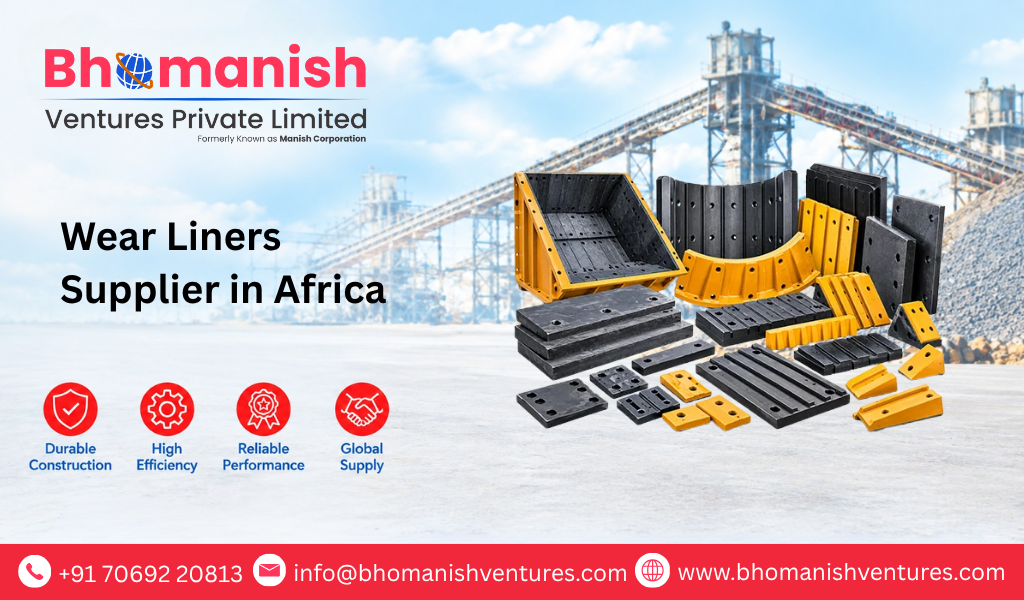
Depending on the application, liners may be manufactured from different wear-resistant materials. Rubber, polyurethane, ceramic, composite and metallic solutions can be considered according to the type of abrasion and impact involved.
For example, a transfer chute handling coarse mineral material may experience significant impact when material falls from one conveyor to another. In contrast, a chute carrying fine abrasive particles at a relatively controlled flow may experience predominantly sliding wear. These two applications can require different liner approaches.
A knowledgeable Wear Liners Supplier in Africa can therefore help buyers evaluate the operating environment before recommending a suitable configuration.
Materials and Technical Considerations
Material selection is one of the most important decisions when purchasing wear protection. There is no universal liner material suitable for every industrial application.
Rubber liners can be considered where impact absorption and noise reduction are important considerations. Polyurethane may be useful in applications requiring abrasion resistance combined with a flexible material solution. Ceramic-based liners are commonly considered for highly abrasive environments where suitable hardness and wear resistance are required. Metallic liners can be appropriate for demanding applications involving heavy impact and mechanical loading.
Other factors should also be reviewed:
- Type and size of material being handled
- Impact energy and material drop height
- Sliding or rubbing movement
- Operating temperature
- Moisture and chemical exposure
- Available installation space
- Liner fastening or fixing method
- Equipment geometry and replacement accessibility
- Frequency of maintenance shutdowns
The right selection should be based on the complete operating environment rather than relying on a single material characteristic.
Key Benefits and Industrial Applications
Well-selected wear liners can help protect the underlying equipment from direct contact with abrasive materials. They can also make maintenance planning more manageable because worn protective sections can be replaced without necessarily replacing the complete equipment structure.
Common applications include:
- Mining and mineral processing equipment
- Quarrying and aggregate handling systems
- Cement plants
- Coal and bulk-material handling
- Steel and metal processing facilities
- Power-generation material handling areas
- Storage hoppers and bins
- Transfer chutes and discharge points
- Feeders and material conveying equipment
For instance, a mining operation may require different liner arrangements for a primary material chute and a fine-material transfer point. A cement plant may have separate requirements for raw-material handling and clinker-related applications. Understanding these differences helps buyers avoid choosing a generic liner for a specialized operating condition.
Common Buyer Problems When Selecting Wear Liners
Buyers searching for a Wear Liners Supplier often encounter several practical challenges. One common issue is premature wear caused by selecting a liner without properly assessing the material flow. Another is incorrect dimensions, which can create installation difficulties or leave vulnerable areas exposed.
Some buyers also focus primarily on the initial Wear Liners Price in Africa instead of considering replacement frequency, installation effort and equipment downtime. A lower initial purchase price may not necessarily represent the most suitable overall solution if the liner is poorly matched to the application.
When contacting a Wear Liners Manufacturer, buyers should provide equipment drawings or dimensions where available, material type, approximate particle size, operating conditions and photographs of the wear area. These details can make product evaluation more practical and application-specific.
How to Choose the Right Supplier and Product
When evaluating a Top Wear Liners Supplier in Africa, buyers can consider several factors rather than relying solely on marketing claims. Product suitability, manufacturing capability, communication, dimensional accuracy, material options and technical understanding are useful areas to discuss.
Companies looking for a Best Wear Liners Supplier in Africa should also clarify whether the supplier can provide customized dimensions where required and whether the proposed liner matches the actual equipment configuration.
If the purchasing team is searching for a Wear Liners Supplier Near me, geographical proximity can be convenient, but application knowledge and supply reliability remain important considerations. For international procurement, buyers may also compare suppliers based on documentation, packaging, shipping coordination and communication.
Before deciding to Buy Wear Liners in Africa, request clear information about material type, dimensions, installation arrangement and application suitability. Buyers looking for Buy Wear Liners for Sale in Africa should also compare complete quotations rather than comparing only the unit price.
Supply Considerations, Maintenance and Performance
For businesses sourcing Wear Liners Supplier & Exporter in Africa solutions, supply coordination should account for product dimensions, quantities, packaging, delivery requirements and project timelines. Specific export arrangements depend on the order, destination and commercial terms, so these should be confirmed directly with the supplier rather than assumed.
After installation, regular inspection can help identify uneven wear, loose sections, cracking, separation or damage around fixing points. Inspection frequency should depend on the severity of the application and the consequences of liner failure.
Maintaining accurate records of liner replacement dates can also help identify recurring wear patterns. If one section repeatedly wears faster than surrounding areas, reviewing material flow, impact direction or liner configuration may reveal an underlying operating issue.
For buyers comparing Wear Liners in Africa, the objective should therefore be a solution that matches the actual application while remaining practical to install, inspect and replace. Bhomanish Ventures Private Limited can be approached for discussions based on the equipment and operating requirements provided by the buyer.
Frequently Asked Questions
1. What are wear liners used for?
Wear liners protect equipment surfaces exposed to abrasion, impact and material movement. They are commonly used in chutes, hoppers, bins, feeders and bulk-material handling equipment.
2. Which material is suitable for wear liners?
The appropriate material depends on the application. Rubber, polyurethane, ceramic, composite and metallic options may be considered based on abrasion, impact, temperature, material characteristics and installation requirements.
3. How can I compare Wear Liners Price in Africa?
Compare quotations based on material, dimensions, configuration, quantity, installation requirements and expected service considerations rather than looking only at the purchase price.
4. Can wear liners be customized?
Depending on the supplier and application, liners can be produced or configured according to equipment dimensions and installation requirements. Drawings, measurements or photographs can help with evaluation.
5. What information should I provide when requesting wear liners?
Useful information includes equipment type, dimensions, material being handled, particle characteristics, operating conditions, photographs and details of the existing liner if available.
6. How do I identify a suitable Wear Liners Supplier in Africa?
Review the supplier's understanding of your application, available material options, customization capability, communication, supply process and ability to provide a solution matching your equipment requirements.
7. Where can I Buy Wear Liners in Africa?
Industrial buyers can contact suppliers directly with their equipment and application details to discuss suitable liner materials, dimensions, quantities, pricing and supply requirements.
Tags : Wear Liners Supplier in Africa, Top Wear Liners Supplier in Africa, Best Wear Liners Supplier in Africa, Wear Liners Supplier, Wear Liners Manufacturer, Wear Liners Supplier Near me, Wear Liners in Africa, Wear Liners Supplier & Exporter in Africa, Wear Liners Price in Africa, Buy Wear Liners in Africa, Buy Wear Liners for Sale in Africa, Wear Liners Supplier in Johannesburg, Wear Liners Supplier in Durban, Wear Liners Supplier in Lagos, Wear Liners Supplier in Cairo, Wear Liners Supplier in Alexandria, Wear Liners Supplier in Accra, Wear Liners Supplier in Nairobi, Wear Liners Supplier in Tunis.