

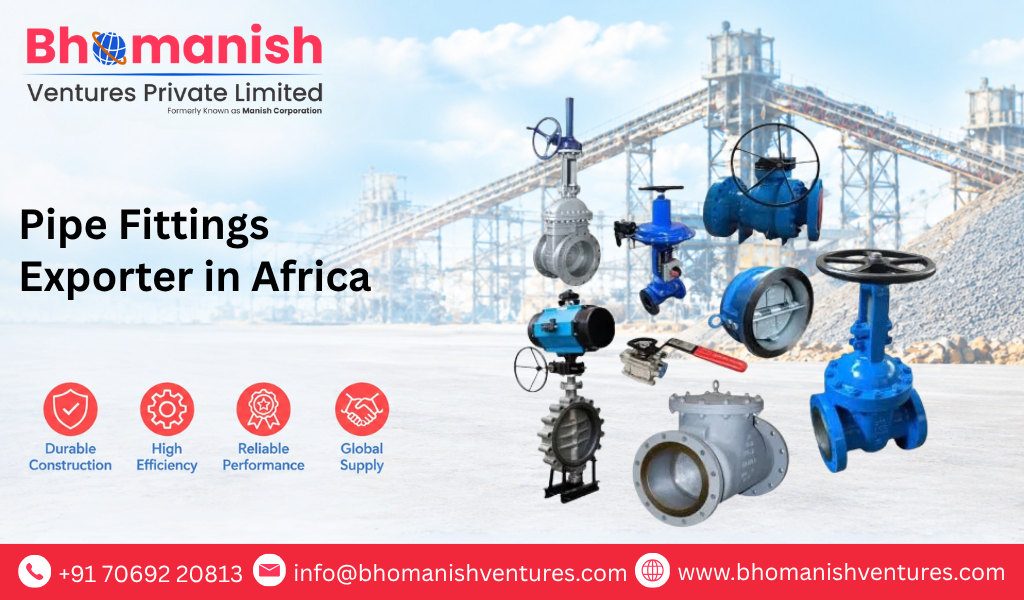
Pipe Fittings Exporter in Africa | Bhomanish Ventures Private Limited
Choosing the right pipe fittings for an industrial project is not simply about finding a component that connects two pipes. Buyers need fittings that match the piping material, dimensions, pressure requirements, connection method, installation conditions, and intended application. For companies sourcing piping components across African markets, reliable product selection and consistent supply are equally important. Bhomanish Ventures Private Limited supports industrial buyers looking for dependable piping solutions with a focus on application requirements, product compatibility, and supply coordination.
What Are Pipe Fittings and How Do They Work?
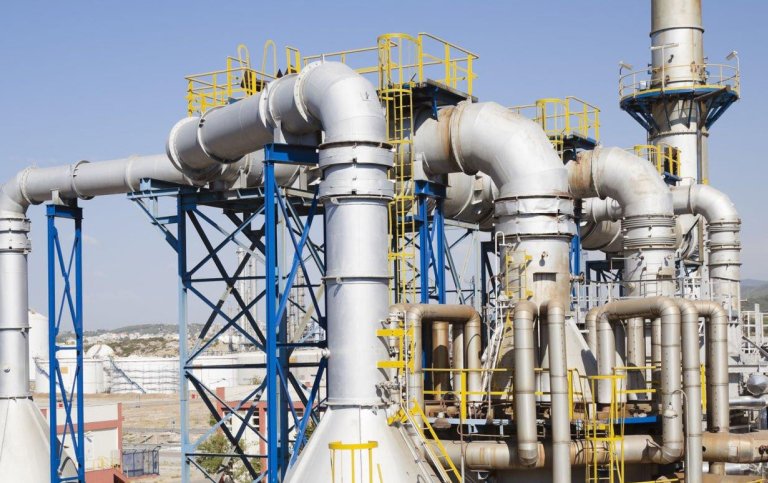
Pipe Fittings Exporter solutions include components used to connect, redirect, branch, terminate, or adapt piping systems. Common fitting configurations include elbows, tees, reducers, couplings, caps, unions, and other connection components. Their purpose is to create a functional piping network while allowing the system to follow the required layout.
As a Pipe Fittings Manufacturer, product selection generally begins with understanding the pipe size, connection type, material, operating environment, and installation requirements. For example, an elbow can change the direction of a pipeline, while a reducer allows a transition between different pipe sizes. A tee can create a branch connection, whereas a cap can close the end of a pipeline.
For buyers searching for a Pipe Fittings Exporter Near me, the practical requirement is often not geographical proximity alone but dependable communication, suitable product identification, documentation, and shipment coordination.
Material and Technical Considerations
Material compatibility is one of the first considerations when purchasing fittings. The fitting material should be appropriate for the piping system and its operating environment. Depending on the application, buyers may evaluate stainless steel, carbon steel, alloy steel, or other suitable engineering materials.
Dimensions also require careful attention. Buyers should confirm nominal pipe size, fitting configuration, connection style, wall thickness requirements where applicable, and dimensional compatibility with the existing piping system. Threaded, socket-type, welded, or other connection arrangements may be selected according to project requirements.
For industrial procurement, buyers should also clarify applicable drawings, standards, inspection requirements, surface condition, marking, packaging, and documentation before placing an order. This helps reduce the possibility of receiving components that are physically unsuitable for installation.
Key Benefits for Industrial Piping Systems
Well-selected fittings can simplify pipeline routing and help create an organized piping arrangement. A suitable Pipe Fittings Supplier in Africa can also help buyers coordinate different fitting types according to project requirements rather than treating every fitting as an isolated purchase.
Key considerations include:
- Correct dimensional compatibility with the pipeline
- Appropriate material selection for the application
- Suitable connection configuration
- Consistent identification and packaging
- Availability across required sizes and configurations
- Clear technical and commercial communication
- Proper shipment planning for project requirements
Buyers comparing Pipe Fittings Price in Africa should consider the complete procurement requirement rather than evaluating price alone. Material, dimensions, quantity, configuration, finishing, inspection requirements, packaging, freight, and delivery terms can all affect the final purchasing cost.
Industry-Wise Applications in Africa
Pipe Fittings in Africa can be required across many industrial and infrastructure environments. Their application depends on the piping system and the medium being transported.
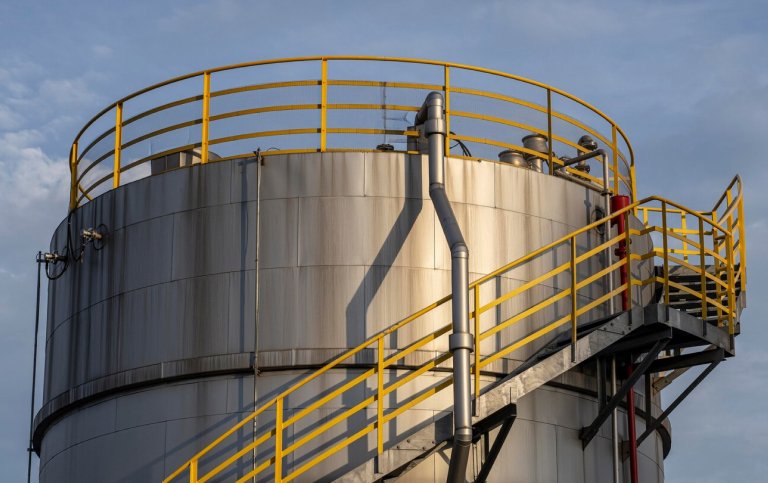
In oil and gas-related facilities, fittings can be used for pipeline routing and connections where the specified material and applicable project requirements must be followed.
In water and wastewater projects, elbows, tees, reducers, couplings, and other configurations can help create practical pipeline layouts for treatment and distribution systems.
In mining operations, piping systems may require fittings for process lines, utility services, slurry-related systems, or plant infrastructure, subject to application-specific engineering requirements.
In chemical and process industries, material compatibility becomes particularly important because the fitting must be appropriate for the operating environment and conveyed medium.
Other potential applications include power facilities, manufacturing plants, construction projects, industrial utilities, and general engineering installations.
Common Buyer Requirements and Buying Guide
Industrial buyers often face challenges such as identifying the correct fitting configuration, matching dimensions with existing pipes, selecting appropriate materials, and coordinating multiple product variants in one order.
Before choosing a Pipe Fittings Exporter, buyers should prepare a clear requirement covering:
- Pipe size and required fitting dimensions.
- Fitting type and quantity.
- Material requirement.
- Connection method.
- Applicable drawings, specifications, or standards.
- Application and operating environment.
- Inspection and documentation requirements.
- Packaging and delivery destination.
Companies planning to Buy Pipe Fittings in Africa should also request confirmation of product availability, lead time, commercial terms, and shipping arrangements before finalizing an order.
For businesses looking for Buy Pipe Fittings for Sale in Africa, comparing suppliers on product suitability, communication, documentation, and supply capability can provide a more practical basis for procurement.
Supply, Performance and Maintenance Considerations
Fittings should be installed according to the relevant engineering instructions and compatible joining procedures. During operation, inspection practices should be determined according to the overall piping system and service conditions. Particular attention may be appropriate around visible leakage, corrosion, mechanical damage, unusual vibration, or connection problems.
For international procurement, Bhomanish Ventures Private Limited can be approached with project-specific requirements so that product configuration, quantities, technical details, packaging, and shipment expectations can be discussed before order confirmation. Export supply should always be finalized against the actual destination, applicable documentation, and agreed commercial terms.
Frequently Asked Questions
1. What types of pipe fittings are commonly required for industrial projects?
Common configurations include elbows, tees, reducers, couplings, caps, unions, and other fittings selected according to pipeline design and connection requirements.
2. How do I select the correct pipe fitting?
Start with pipe size, material, connection type, application, operating conditions, required configuration, and any applicable project specifications.
3. Does pipe fitting material matter?
Yes. Material compatibility is important because the fitting must suit the piping system and its intended operating environment.
4. How can I compare pipe fitting prices?
Compare complete quotations based on material, size, configuration, quantity, specifications, inspection requirements, packaging, freight, and delivery terms rather than unit price alone.
5. Can pipe fittings be supplied for different African markets?
Supply feasibility depends on the specific destination, product requirements, quantity, documentation, and agreed shipping arrangements. Buyers should confirm these details before ordering.
6. What information should I provide when requesting a quotation?
Provide fitting type, size, material, quantity, connection details, technical specifications or drawings where applicable, destination, and required delivery schedule.
7. Why should buyers discuss specifications before purchasing?
Clear specifications help reduce dimensional or material mismatches and allow the supplier to prepare a quotation based on the actual application rather than assumptions.
Tags : Pipe Fittings Exporter in Africa, Top Pipe Fittings Exporter in Africa, Best Pipe Fittings Exporter in Africa, Pipe Fittings Exporter, Pipe Fittings Manufacturer, Pipe Fittings Exporter Near me, Pipe Fittings in Africa, Pipe Fittings Supplier in Africa, Pipe Fittings Price in Africa, Buy Pipe Fittings in Africa, Buy Pipe Fittings for Sale in Africa, Pipe Fittings Exporter in Johannesburg, Pipe Fittings Exporter in Durban, Pipe Fittings Exporter in Lagos, Pipe Fittings Exporter in Cairo, Pipe Fittings Exporter in Alexandria, Pipe Fittings Exporter in Accra, Pipe Fittings Exporter in Nairobi, Pipe Fittings Exporter in Tunis.