

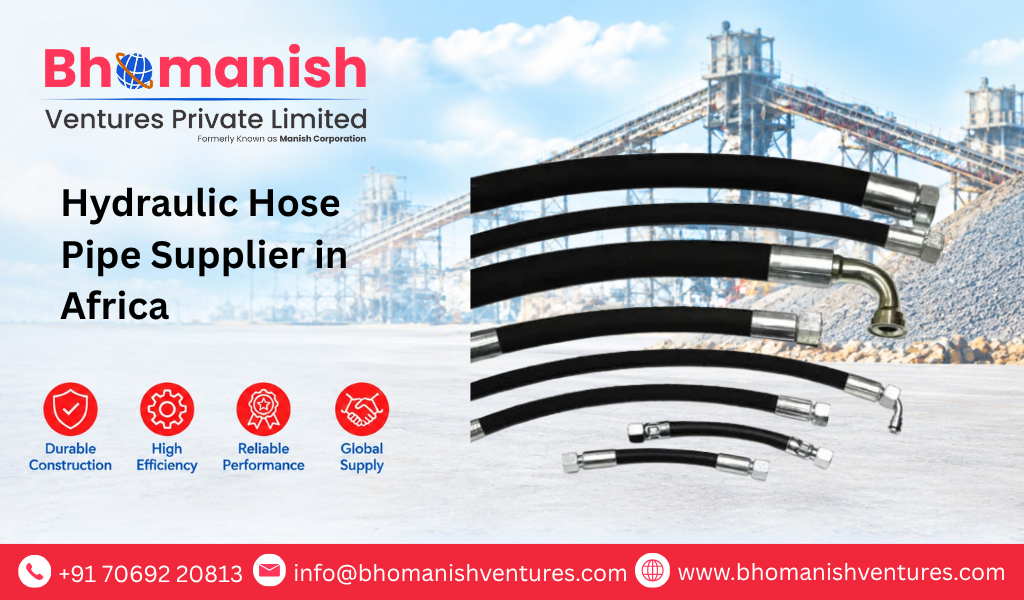
Hydraulic Hose Pipe Supplier in Africa
Industrial machinery across Africa depends on reliable fluid-transfer components to maintain safe and efficient operation. Hydraulic systems used in construction, mining, agriculture, material handling, manufacturing, and mobile equipment require hoses that can handle the operating conditions of the application. Buyers therefore need to consider pressure requirements, fluid compatibility, temperature, flexibility, connection type, installation environment, and expected service conditions before purchasing.
Bhomanish Ventures Private Limited supplies hydraulic hose pipe solutions for industrial buyers seeking dependable options for different hydraulic applications. Whether the requirement is for replacement hoses, regular industrial supply, or project-based procurement, selecting the appropriate hose according to the equipment and operating environment is essential.
What Is a Hydraulic Hose Pipe and How Does It Work?
A Hydraulic Hose Pipe is a flexible component designed to transfer hydraulic fluid between different components of a hydraulic circuit. Unlike rigid piping, a hose can accommodate equipment movement, vibration, and changes in positioning.
A typical hydraulic hose consists of an inner tube, reinforcement layer, and outer cover. The inner tube comes into contact with the hydraulic fluid, while the reinforcement provides resistance against internal pressure. The outer cover helps protect the assembly from environmental conditions such as abrasion and contamination.
When hydraulic equipment operates, pressurized fluid travels through the hose between pumps, valves, cylinders, motors, and other components. Proper hose selection helps maintain fluid flow while reducing the possibility of leakage, premature wear, or unexpected downtime.
Materials and Technical Considerations
When evaluating a Hydraulic Hose Pipe Supplier, buyers should look beyond price and consider whether the hose matches the application. Material construction and operating conditions directly influence suitability.
Important considerations include:
- Inner Tube Material: Must be compatible with the hydraulic fluid being used.
- Reinforcement: Wire or textile reinforcement can be selected according to the application's pressure and flexibility requirements.
- Outer Cover: Should suit the surrounding environment, particularly where abrasion, oil exposure, moisture, or outdoor conditions are present.
- Temperature: Both the hydraulic fluid temperature and surrounding environmental temperature should be considered.
- Pressure: The hose assembly should be appropriate for the system's working pressure and operating conditions.
- Bend Radius: Installation should respect the manufacturer's recommended minimum bend radius.
- End Connections: Thread type, fitting configuration, and connection dimensions need to match the equipment.
- Length: Correct hose length helps prevent excessive bending, stretching, or unnecessary loops.
For buyers comparing a Hydraulic Hose Pipe Manufacturer, technical documentation and application compatibility can be more useful than selecting a product based only on appearance or price.
Key Features and Benefits for Industrial Applications
A properly selected hose can support reliable hydraulic system operation while making equipment maintenance more manageable. Flexible construction allows hydraulic lines to connect moving components where rigid piping would be unsuitable.
Depending on the selected construction, hydraulic hoses can provide useful characteristics such as flexibility, resistance to operating pressure, compatibility with suitable hydraulic fluids, and protection against external wear.
For companies searching for a Top Hydraulic Hose Pipe Supplier in Africa, important purchasing considerations include product consistency, correct fitting selection, communication regarding technical requirements, packaging, and supply capability.
Hydraulic Hose Pipe in Africa can be required across a wide range of operating environments, from workshops and factories to heavy equipment working in demanding outdoor conditions.
Industry-Wise Applications
Hydraulic hose assemblies are used wherever hydraulic power needs to be transferred between system components. Common applications include:
Construction: Excavators, loaders, cranes, compactors, and other hydraulic equipment can require hoses for cylinders, control systems, and auxiliary circuits.
Mining: Hydraulic systems used in mining equipment may operate in environments where abrasion, dust, vibration, and difficult maintenance access are important considerations.
Agriculture: Tractors, harvesters, sprayers, and agricultural machinery use hydraulic systems for lifting, steering, attachments, and other functions.
Manufacturing: Hydraulic presses, production machinery, material-handling systems, and industrial equipment may use hoses for fluid connections.
Material Handling: Forklifts, lifting systems, and hydraulic handling equipment can require flexible hose assemblies for moving hydraulic components.
Automotive and Workshops: Repair and maintenance facilities may require replacement hoses for hydraulic machinery and equipment.
These varied applications mean that one hose specification cannot automatically suit every machine. The operating conditions should be evaluated before ordering.
Common Buyer Problems and How to Choose the Right Hose
Buyers often encounter issues such as selecting the wrong fitting, using an unsuitable hose length, misunderstanding pressure requirements, or choosing a product without checking fluid compatibility. A hose that physically fits an installation may still be unsuitable for its actual operating conditions.
Before you Buy Hydraulic Hose Pipe in Africa, provide the supplier with available information about the equipment, hydraulic fluid, working pressure, operating temperature, hose dimensions, fitting requirements, and installation environment.
Buyers searching for a Hydraulic Hose Pipe Supplier Near me may also benefit from confirming whether the supplier can provide technical assistance and consistent replacement availability.
For businesses evaluating Hydraulic Hose Pipe Price in Africa, the final cost may depend on hose construction, dimensions, fittings, quantity, specifications, and procurement requirements. Comparing products solely on price can overlook compatibility and lifecycle considerations.
If you are looking to Buy Hydraulic Hose Pipe for Sale in Africa, clearly defining the required specification before requesting a quotation can make purchasing more efficient and reduce the possibility of ordering an unsuitable assembly.
Supply, Selection and Maintenance Considerations
A suitable Hydraulic Hose Pipe Supplier & Exporter in Africa should receive complete application information before preparing a supply recommendation. For international procurement, buyers should also clarify quantities, packaging, documentation, delivery requirements, fitting configurations, and applicable commercial terms before confirming an order.
After installation, regular visual inspection can help identify external damage, abrasion, cracking, leakage, or signs of deterioration. Hoses should be routed properly and kept away from unnecessary rubbing, excessive bending, or contact with components that could damage the outer cover.
Replacing a hose when significant deterioration is identified can help reduce the risk of unplanned equipment interruption. Installation should follow appropriate manufacturer and equipment guidelines, particularly when working with pressurized hydraulic systems.
Frequently Asked Questions
1. What should I provide when ordering a hydraulic hose?
Provide the hose size, required length, fitting details, hydraulic fluid type, operating pressure, temperature range, and equipment/application information whenever available.
2. Can one hydraulic hose be used for different machines?
Not necessarily. Different machines may have different pressure, temperature, fluid, fitting, and installation requirements.
3. How is hydraulic hose price determined?
Pricing can vary according to hose dimensions, construction, reinforcement, fittings, quantity, and other specification or supply requirements.
4. Why is fitting compatibility important?
Incorrect fittings can prevent proper installation and may contribute to leakage or connection problems. Thread type, size, and configuration should be verified before ordering.
5. How can hydraulic hose service life be supported?
Correct selection, proper routing, suitable bend radius, protection from abrasion, and routine inspection can help maintain hose performance.
6. What industries commonly use hydraulic hose pipes?
Construction, mining, agriculture, manufacturing, material handling, workshops, and other industries operating hydraulic machinery commonly use hydraulic hoses.
7. Who should I contact for hydraulic hose requirements?
Businesses can discuss their application and technical requirements with Bhomanish Ventures Private Limited to identify a suitable hydraulic hose solution and obtain relevant supply information.
Tags : Hydraulic Hose Pipe Supplier in Africa, Top Hydraulic Hose Pipe Supplier in Africa, Best Hydraulic Hose Pipe Supplier in Africa, Hydraulic Hose Pipe Supplier, Hydraulic Hose Pipe Manufacturer, Hydraulic Hose Pipe Supplier Near me, Hydraulic Hose Pipe in Africa, Hydraulic Hose Pipe Supplier & Exporter in Africa, Hydraulic Hose Pipe Price in Africa, Buy Hydraulic Hose Pipe in Africa, Buy Hydraulic Hose Pipe for Sale in Africa, Hydraulic Hose Pipe Supplier in Johannesburg, Hydraulic Hose Pipe Supplier in Durban, Hydraulic Hose Pipe Supplier in Lagos, Hydraulic Hose Pipe Supplier in Cairo, Hydraulic Hose Pipe Supplier in Alexandria, Hydraulic Hose Pipe Supplier in Accra, Hydraulic Hose Pipe Supplier in Nairobi, Hydraulic Hose Pipe Supplier in Tunis.